

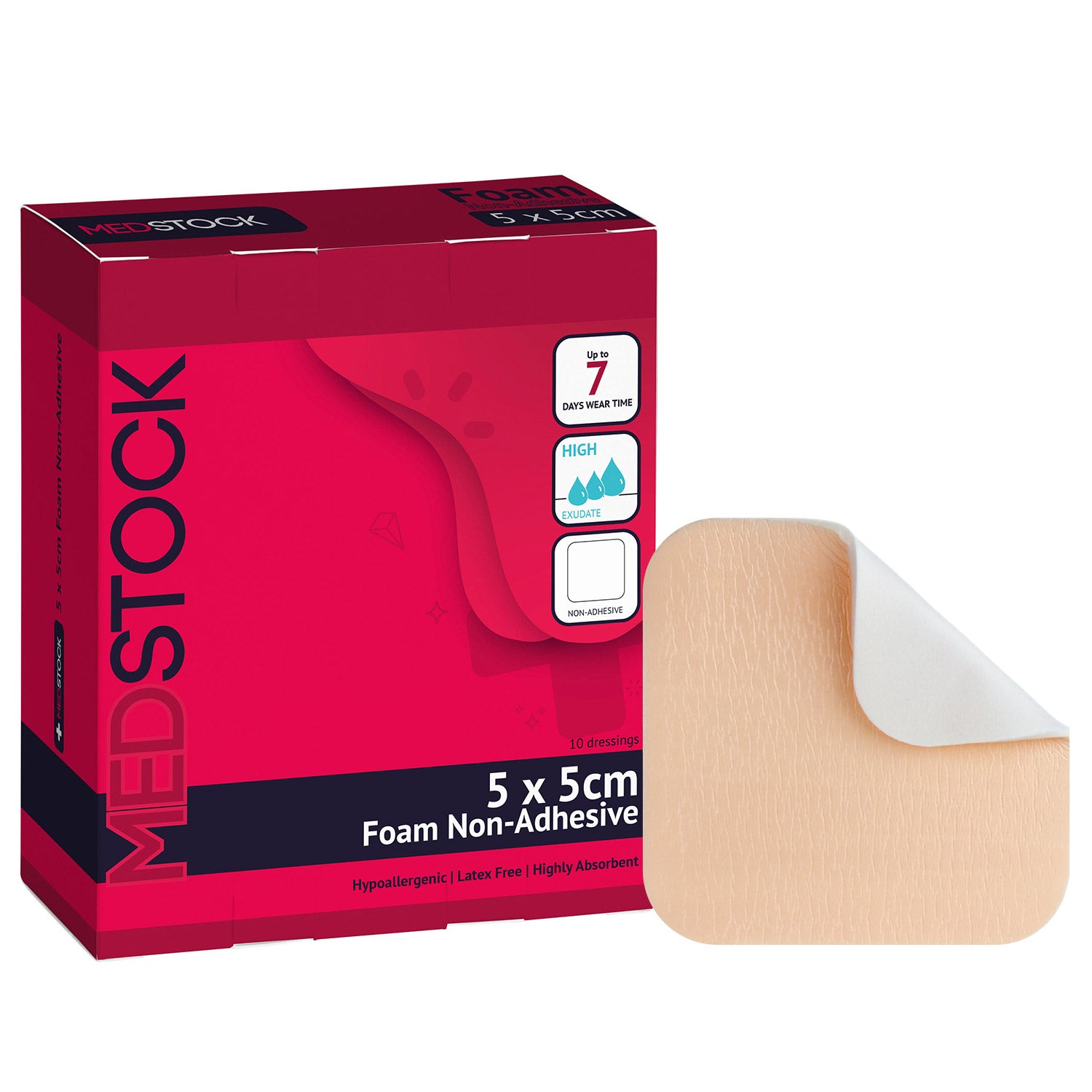
Medstock Foam Non-Adhesive Dressing is a highly absorbent, polyurethane foam dressing that contains carboxymethylcellulose (CMC) hydrophilic granules that promotes and maintains a balanced, moist healing environment.
- Highly absorbent
- Reduces the risk of maceration to wound and periwound
- Embedded with carboxymethylcellulose hydrophilic granules that promotes a moist wound healing environment
- Ability to vertically wick exudate away from the wound and retain exudate in the core of the foam
- Non-adherent to the wound preventing damage to healing tissue
- Surface layer consists of a semi-permeable polyurethane film to protect the wound against water, bacteria and foreign matters
- Good elasticity which prevents pressure on the wound bed
- Effective odour control for malodorous wounds
- Suitable for wounds with low to high exudate
- Adaptable to different phases of wound healing
- Partial thickness burns
- Pressure ulcers
- Venous ulcers
- Arterial ulcers
- Mixed aetiology ulcers

Related Products
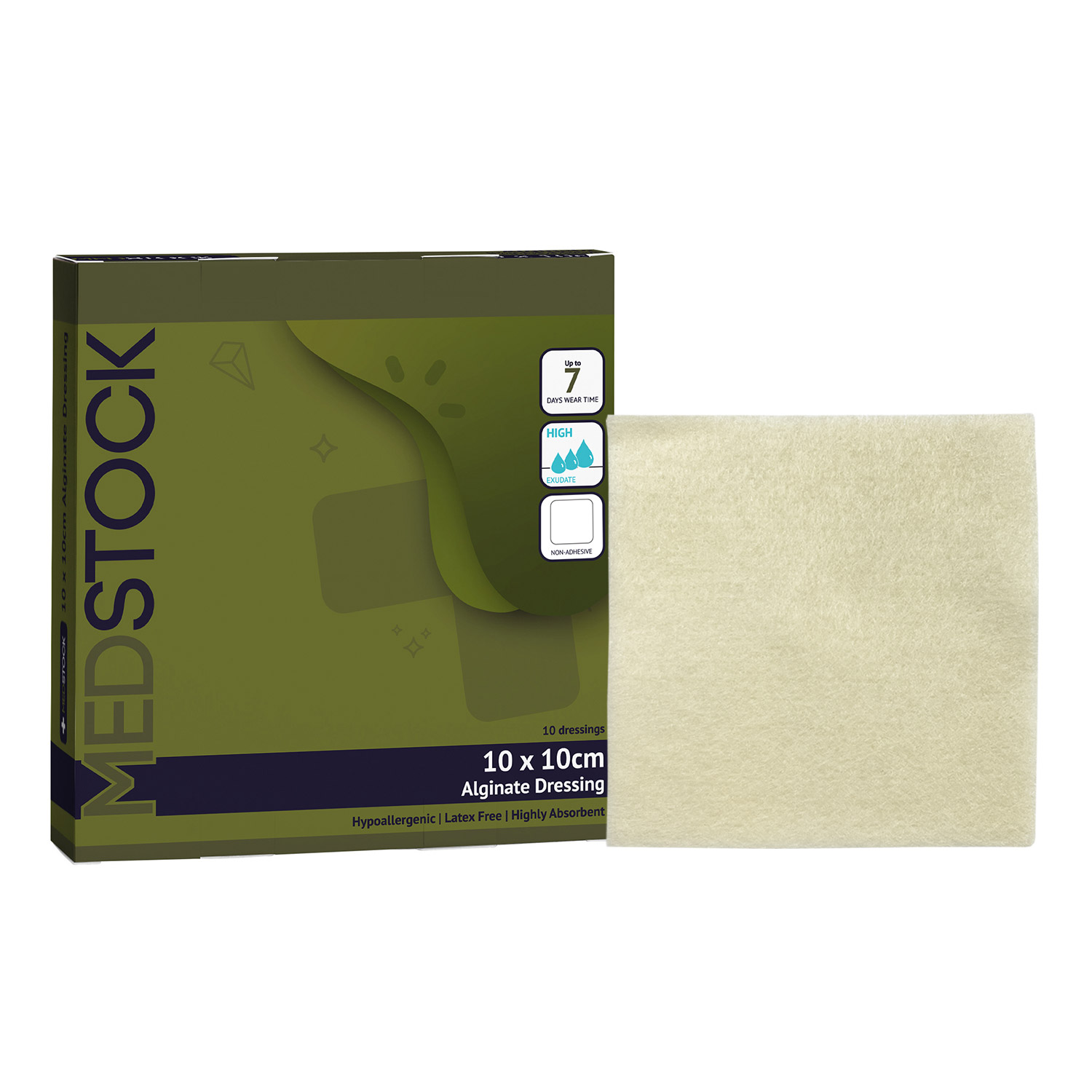
Alginate Dressing
Medstock Alginate Dressing is a naturally derived, non-woven dressing made of 100% calcium alginate fibres that effectively absorbs exudate and provides a moist healing environment.
Read more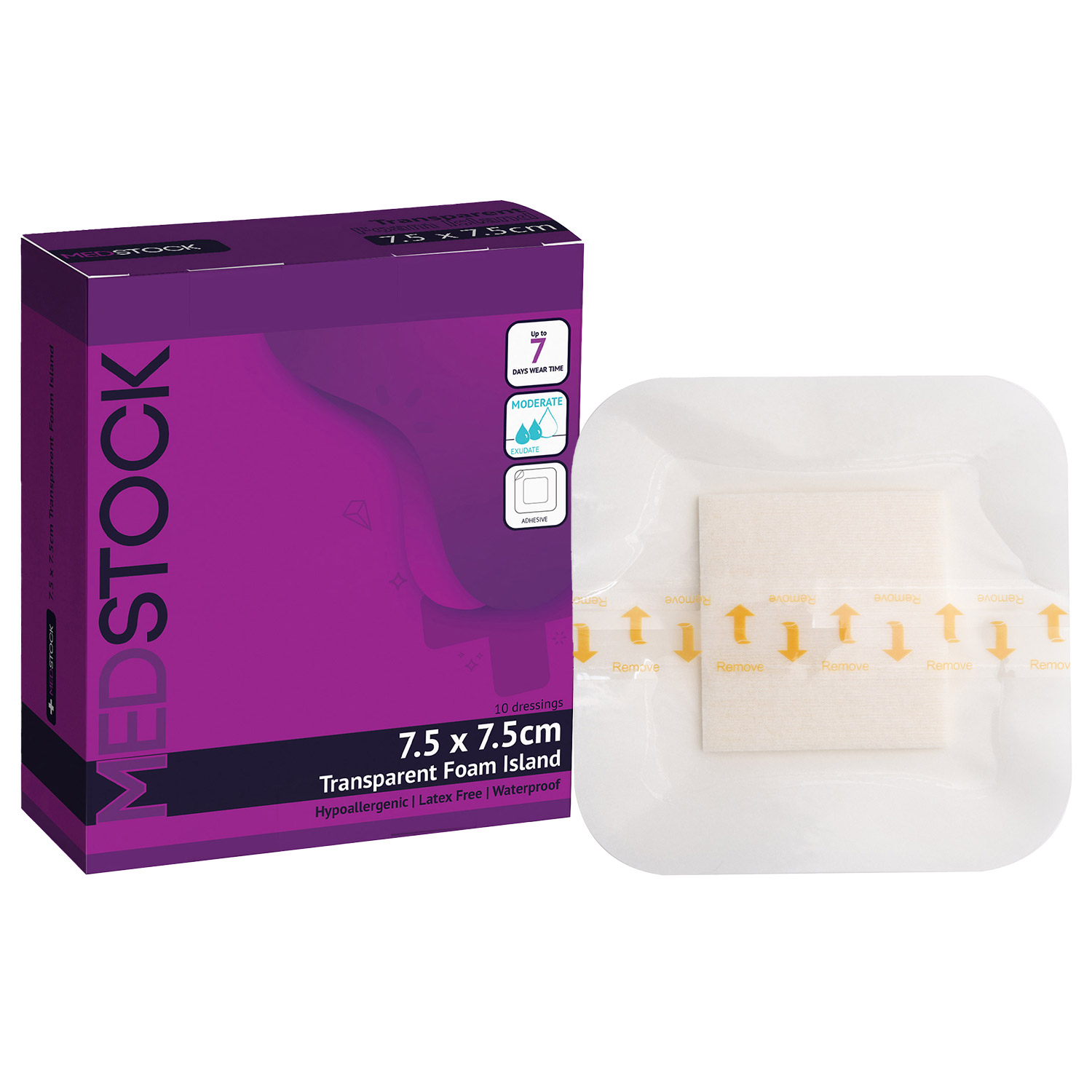
Transparent Foam Island Dressing
Medstock Transparent Foam Island Dressing is a transparent, highly permeable polyurethane foam dressing that incorporates carboxymethylcellulose (CMC) hydrophilic granules within the dressing to promote wound healing.
Read more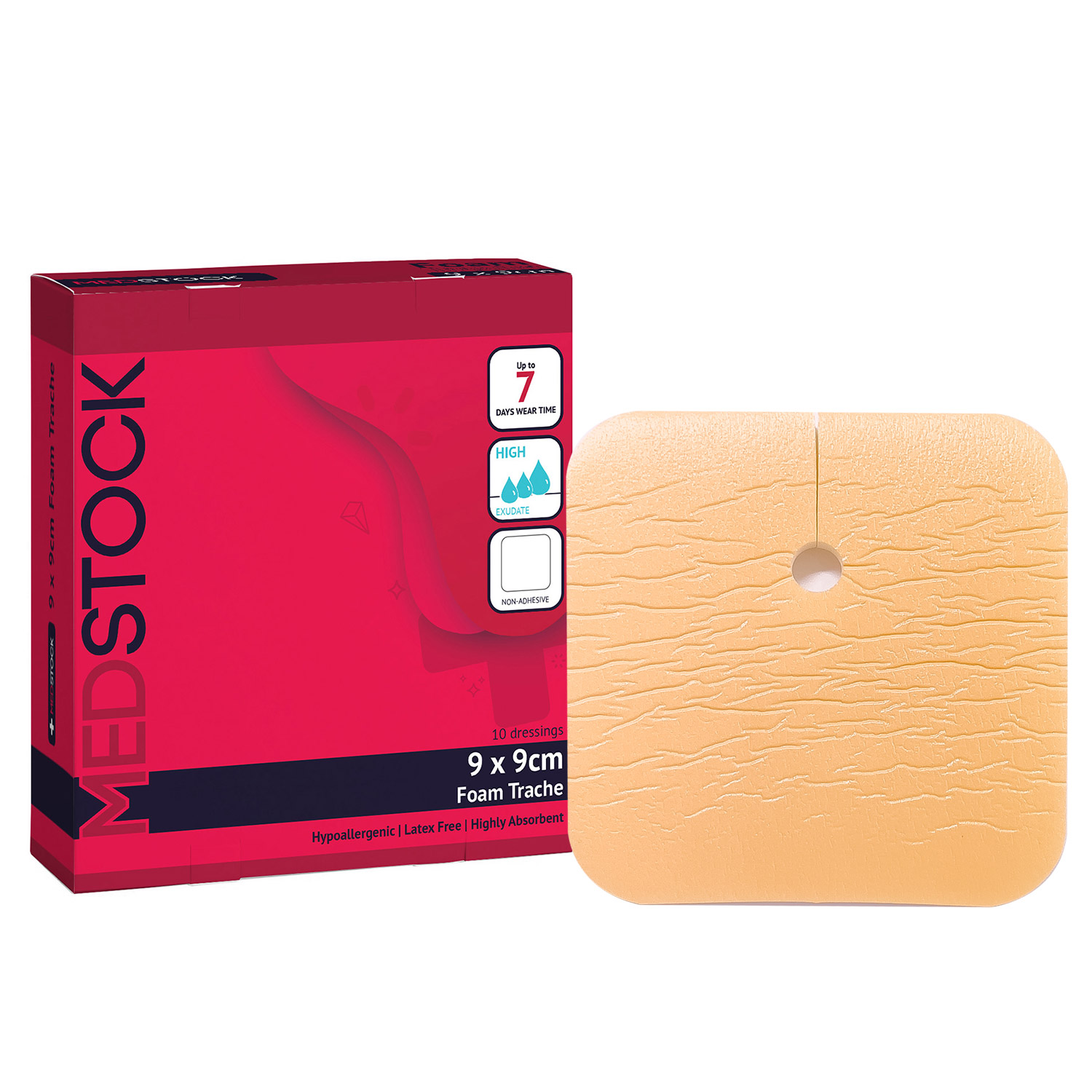
Foam Non-Adhesive Tracheostomy Dressing
Medstock Foam Tracheostomy Dressing is an efficient polyurethane foam dressing featuring a versatile fenestration, allowing it to fit neatly around a tracheostomy tube, cannula insertion, external bone fixators, and various appropriately sized drainage tubes.
Read more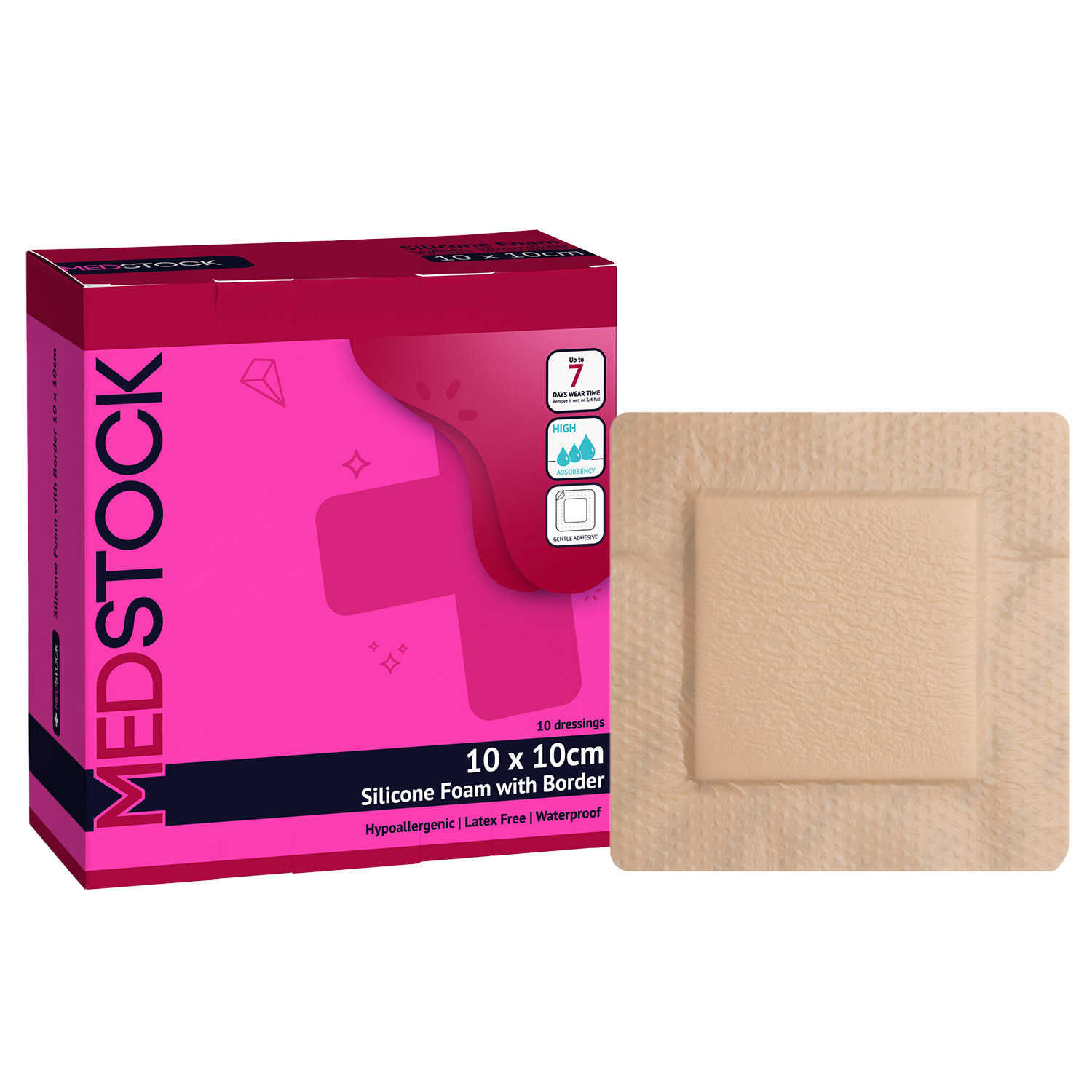
Silicone Foam Dressing with Border
Medstock Silicone Foam with Border is a 5-layered foam dressing that is both highly absorbent and gentle on fragile wound tissue. Its silicone adhesive skin contact layer provides secure adhesion whilst reducing the risk of epidermal stripping on removal.
Read more